
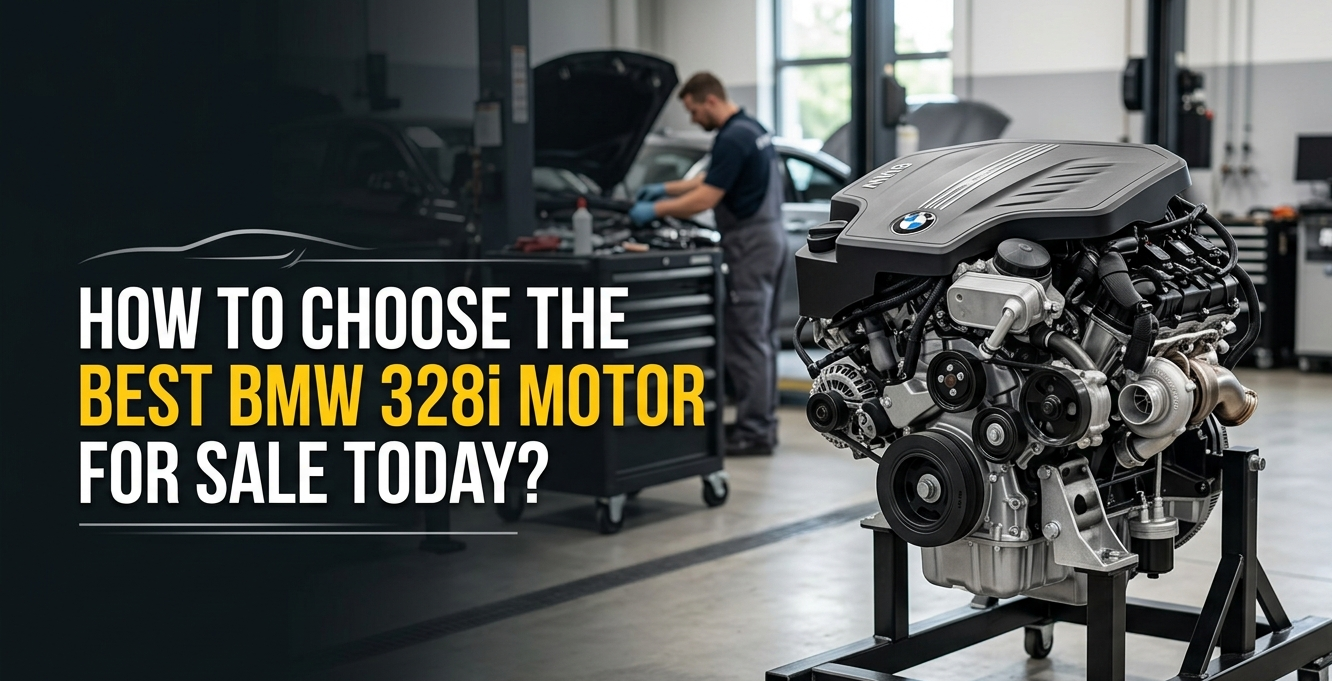
BMW engineers are known for pushing the boundaries of performance and technology. But that ambition comes with complexity, and complexity creates more potential failure points. When buying or already owning a used BMW engine, understanding its common problem areas and how to address them can mean the difference between a reliable daily driver and a money pit.
1. VANOS System Failures
VANOS is BMW's variable valve timing system, featured on most BMW engines from the early 1990s onward. In used engines with significant mileage, VANOS solenoids, seals, and actuators commonly wear out, leading to rough idling, poor power delivery, and fault codes for intake or exhaust camshaft timing.
Fix: For older VANOS units (M50/M52), rebuild kits are widely available and the job can be performed by an experienced DIYer. For single and double VANOS units on newer engines, replacing the solenoids is often the starting point. Full VANOS rebuilds on N52 and N54 engines are more involved but well-documented in the BMW community.
2. High-Pressure Fuel Pump (HPFP) Failure
The N54 twin-turbo engine is notorious for high-pressure fuel pump failures. The HPFP is responsible for building the fuel pressure needed for direct injection. When it fails, the engine will stumble, hesitate, and eventually refuse to start. This was such a significant issue that BMW issued an extended warranty for HPFP on N54 engines.
Fix: Replacement of the HPFP is the only solution. The part has improved in later revisions, so always install the latest updated version available. Budget $400–$700 for parts and labor at an independent shop.
3. Oil Leaks from Gaskets and Seals
Nearly every used BMW engine of significant mileage will have some degree of oil seepage. The most common culprits are the valve cover gasket, oil pan gasket, and rear main seal. On the N52 and M54 engines, the oil filter housing gasket is an especially common leaker.
Fix: Gasket and seal replacements are straightforward repairs for a BMW-experienced mechanic. The parts are inexpensive; the labor is where the cost accumulates. Many owners tackle valve cover gaskets as a DIY project. For rear main seal replacements, the transmission typically must come out — factor this into your budget.
4. Cooling System Component Failures
BMW uses plastic thermostat housings, expansion tanks, and coolant hoses that are prone to cracking and failure as they age. A sudden cooling system failure can quickly lead to an overheated engine, and an overheated BMW engine is an expensive problem.
Fix: The standard preventive approach for any used BMW engine with 80,000+ miles is to proactively replace the thermostat, expansion tank, water pump (if electric, check the impeller), and all coolant hoses. This "coolant system refresh" is one of the most recommended procedures in the BMW community and can prevent catastrophic damage.
5. Crankshaft Bearing Wear (N52, S54, M54)
Rod and main bearing wear is a documented concern in several BMW engine families, most notably the S54 in the E46 M3 but also seen in high-mileage N52 and M54 engines. Metal-to-metal contact from worn bearings produces a deep, rhythmic knocking and will eventually seize the engine if unaddressed.
Fix: Bearing replacement requires engine removal and partial disassembly. It is not a DIY job for the inexperienced. However, the bearings themselves are affordable, and a machine shop inspection can determine if the crankshaft needs refinishing or only new bearings.
6. Injector Failures on Direct Injection Engines
The N54 and N55 direct injection engines experience injector degradation over time, leading to fuel spray pattern irregularities, misfires, and rough running. Carbon buildup on intake valves — a consequence of direct injection — also causes these symptoms.
Fix: Injector replacement for all six cylinders is recommended when one fails, as the others are likely at similar mileage. Walnut blasting of the intake valves every 50,000–70,000 miles is an effective preventive measure.
7. Vanos and Valvetronic Motor Failures
Valvetronic, BMW's system for continuously variable valve lift, is featured on many modern BMW engines. The Valvetronic motor and eccentric shaft sensor are points of failure that cause rough idle, limp mode, and fault codes. These components are expensive to replace.
Fix: Scan for fault codes first to identify whether it is the motor, sensor, or eccentric shaft itself. The motor is the most common failure point and can be replaced without full engine removal.
FAQ
Q: How do I know if a used BMW engine has been overheated?
A: Look for white residue inside the coolant reservoir, milky oil on the dipstick, warped cylinder head surfaces (requires inspection), or carbon tracking on the head gasket.
Q: Is walnut blasting necessary for every used BMW GDI engine?
A: If the engine's history is unknown, assume the valves need attention and schedule walnut blasting as part of the intake service.
Q: Are OEM BMW parts worth the premium over aftermarket?
A: For critical systems like the cooling system and fuel delivery, OEM or quality OEM-equivalent parts are strongly recommended. For wear items and gaskets, reputable aftermarket brands like Elring, Victor Reinz, and Mahle are considered acceptable.
Q: What is the lifespan of an N55 engine with proper care?
A: With meticulous oil change discipline and cooling system maintenance, a well-cared-for N55 can comfortably reach 150,000 to 200,000 miles.
Q: Can I rebuild a high-mileage N54 engine rather than replace it?
A: Yes. N54 rebuilds are well-supported by the aftermarket. Pistons, rings, bearings, and a timing chain refresh can restore the engine to near-new performance.
Conclusion
Used BMW engines are rewarding when you know what to look for and how to address their known weaknesses. Whether you are tackling a VANOS rebuild yourself or having a specialist refresh the cooling system, staying ahead of these problems is key. When it comes to sourcing quality used BMW engine components, Moon Auto Parts provides a trusted source for verified parts that help keep your BMW performing at its best.
Read Also: Everything You Need to Know About Used BMW Engines



Write a comment ...